
The 2026 Total Retail Loss Benchmark Report
A deep dive into shrink, fraud, and operational loss by Appriss Retail
Total Retail Loss (TRL) offers a new view on loss prevention and the consumer experience driving it.
And to tackle it they’ll need cross-functional muscle from their loss prevention, operations, customer experience, and finance teams. In this report you’ll learn why:

Retailers face $4B in cross-channel fraud from BORIS returns

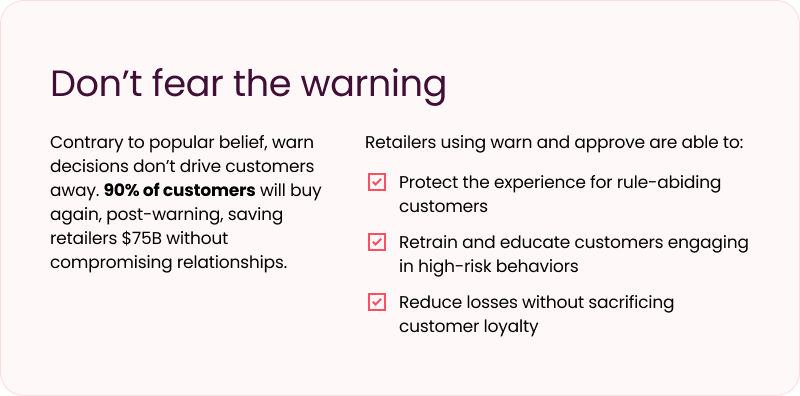
The addition of a third “warn and approve” decision can reduce abusive returns by 90% without impacting customer loyalty.

High value customers are returning less than your average shopper, yet blanket policies treat them like the problem.
Scale of the challenge
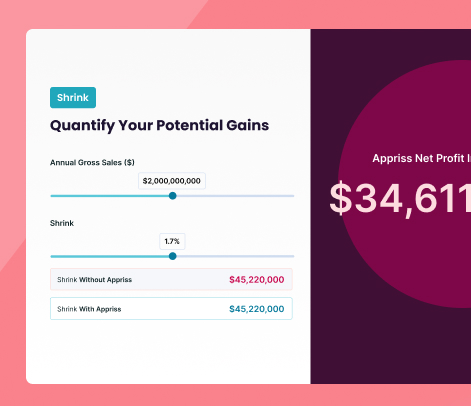
We’ve created a Total Retail Loss Calculator to help you explore how these patterns play out in your specific retail business.
As shrink, fraud and abuse grow in value and sophistication, leaders will need enterprise-wide visibility into every touchpoint to contain profit leakage. That visibility starts with understanding the complex relationship between returns, margins, and customer loyalty.
Navigating 2026 Total Retail Loss
While retail leaders race to keep up in an omnichannel world, there are two adversaries quietly wrecking profits.
Returns and shrink are doing immense damage to retailers’ bottom line. Last year, consumers made $706B in returns, and retailers faced $89B in loss from shrink, much of it preventable. Both are growing because traditional views on loss prevention are riddled with blind spots.
Taking the blinders off
Of the $706B in returns, 14.2% ($100B) is preventable loss due to returns fraud and abuse. Returns-related loss has a 1-to-1 impact on profits.
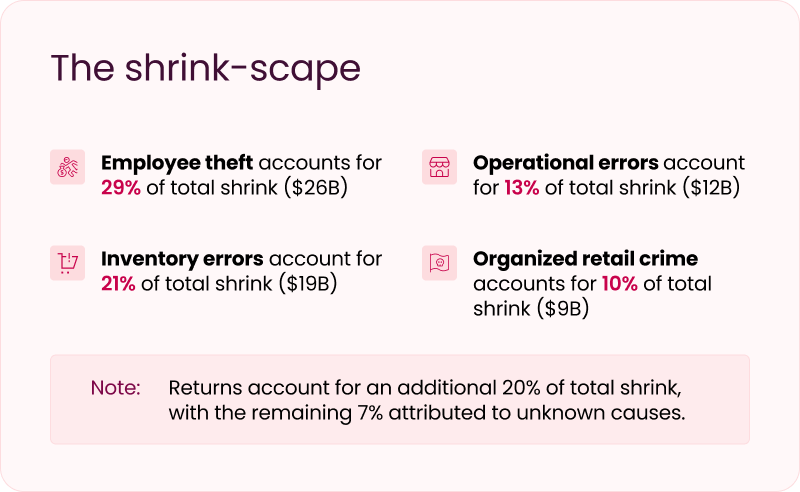
Of the $90B in shrink, a whopping 73% ($66B) is preventable loss due to:
Employee theft: 29% ($26B)
Inventory errors: 21% ($19B)
Operational inefficiencies: 13% ($12B)
ORC (Organized Retail Crime): 10% ($9B)
Note: Returns account for an additional 20% of total shrink, with the remaining 7% attributed to unknown causes.
The challenge for retailers: how do they address these behaviors without damaging customer experience or loyalty? Most are stuck using outdated approaches because they’re scared to rock the boat.
Our sources
We’ve brought together survey data from 1,000+ consumers, internal analytics from Appriss Retail clients, and industry data to show the extent to which loss is affecting profit margin.
Instead of focusing solely on fraud—an outdated angle on loss prevention–the 2026 TRL report looks at how retailers’ approach to behavior patterns and transactional data can act as both deterrents and profit boosters.
The data reveals something surprising: customers are more open to AI-driven decisions than retailers assume, and the technology to act on that openness already exists
Returns, margins and loyalty: a new kind of balancing act
Today, returns impact every part of the organization. Operations teams process the volume. Customer experience teams handle the disputes. Merchandising absorbs the margin hit. Loss prevention can’t solve this in isolation.
Weighing customer experience vs. controls
Returns added up to $706B in 2025 – a figure that’s grown as omnichannel shopping expands and return policies become more generous. $100B of that is preventable fraud and abuse.
Why returns matter to purchase decisions
For customers, ease of returns is a major purchase factor. Yet many retailers still rely on one-size-fits-all return policies, leading to frustrated customers and higher fraud risk. Create too much friction, these buyers are happy to take their business elsewhere.
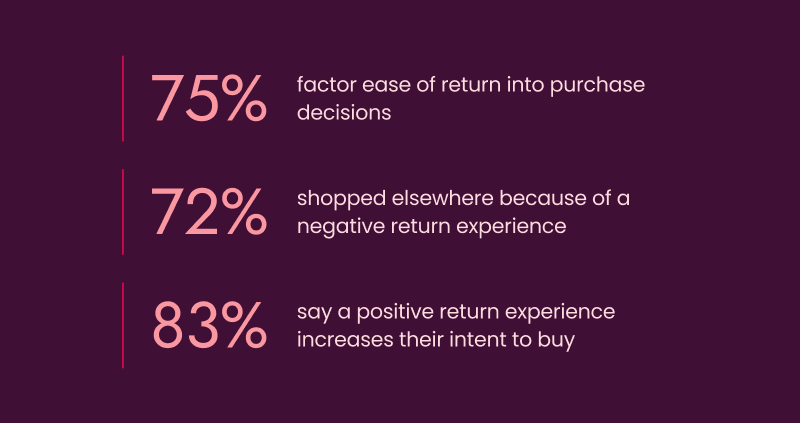
Finding the sweet-spot between protecting margins and keeping good customers isn’t always easy. But, the clues are hidden in how you’re thinking (or not thinking) about returns.
The profit opportunity in returns
While fraud, and abuse might be hammering away at your bottom line, reducing them actually increases net profits.
- 8 in 10 shoppers say a good return experience boosts repeat purchase intent
- 73% of shoppers (80% of frequent returners) made an extra purchase after a positive return experience
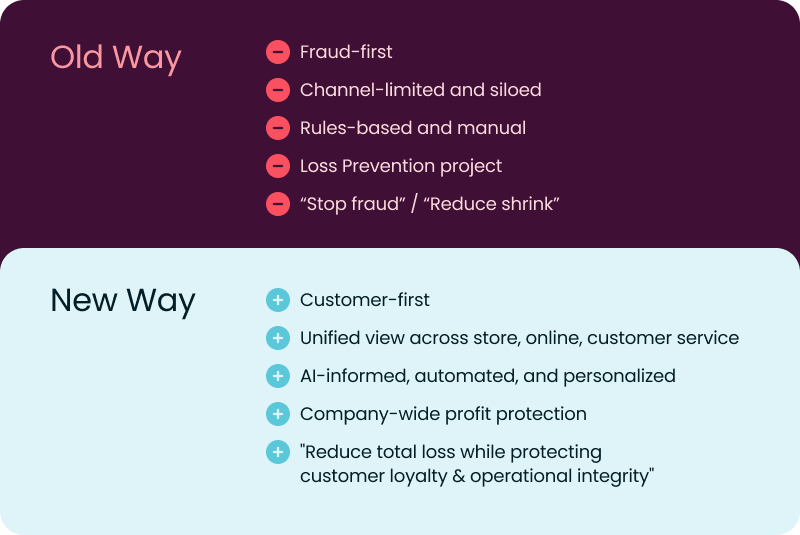
Retail leaders taking advantage of this profit boost have embraced a new way of thinking about Total Retail Loss–one that goes far beyond shrink.
The fragility of brand loyalty
Product quality and competitive prices drive loyalty, while service, convenience and return experiences reinforce it.
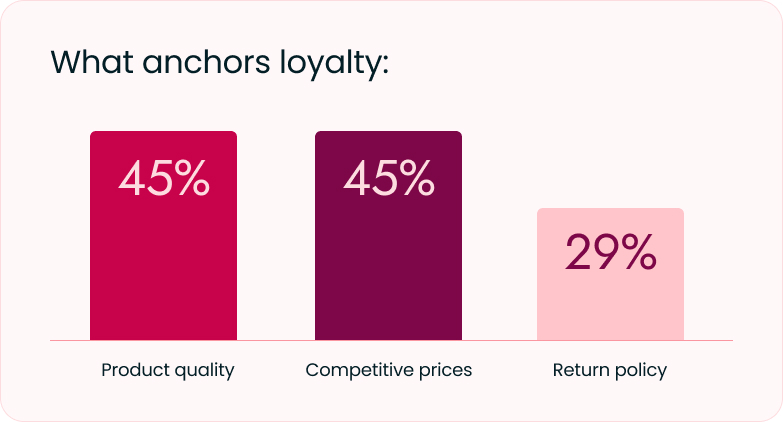
Understanding what drives loyalty matters because blanket return policies ignore these nuances entirely and risk alienating your best customers.
The problem with blanket policies
Assessing customer risk requires analyzing return velocity, cross-channel behavior patterns, product categories, purchase history, and temporal trends—impossible to evaluate manually at the point of sale. Without this analysis, retailers are defaulting to blanket policies that treat all customers the same.
But many of these policies, designed to stop fraud and abuse, punish your most profitable relationships.
- Generate up to 50% of total sales
- Return 8% less than average shopper
Blanket policies designed to address “bad” behavior, end up catching your best customers. Because they buy more, they typically hit policy tripwires–receiptless limits, short windows, ID checks–more often.
The smarter approach: Customer-level decisions that account for risk potential, purchase volume and return rate–not just return dollars–protect margins without alienating your best customers.
But implementing customer-level decisions requires something most retailers don’t have: unified visibility across all channels. That’s where the omnichannel challenge begins.
BORIS is redefining retail loss
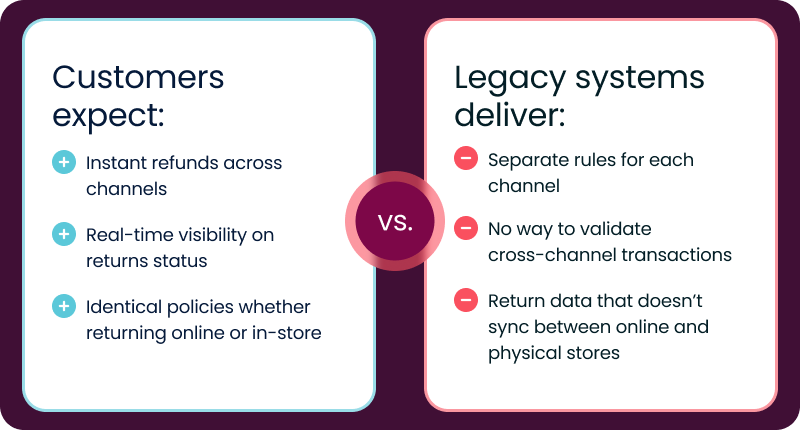
Customers feel the mismatch:
55% of customers read return policies before making a purchase. This number rises with return frequency (84% for very frequent returners), and those buyers notice when in-store and online experiences differ.
- 62% perceive in-store and online return experiences as different
- 36% of very frequent returners feel this gap acutely (vs. 24% of occasional returners)
- 13% have switched retailers due to inconsistent cross-channel policies
In-person returns still win
Regardless of return frequency, shoppers prefer in-person return methods — especially if they bought the item in store.
- 83% prefer to return in store if they purchased in store
- 45% still prefer in store even if they purchased online
The margin loss on omnichannel
In-store returns now account for 81% of all returns. This puts massive pressure on store operations and creates huge losses associated with managing non-store inventory.
Bought in-store, returned in-store (BISRIS): 52% ($367B)
Bought online, returned in-store (BORIS): 29% ($208B)
Bought online, returned online (BORO): 19% ($131B)
The omnichannel breakdown
While a majority of consumers still return items in store, nearly half have utilized at least one method of omnichannel return.
Omnichannel reality: A single transaction might span multiple digital and physical touchpoints, including customer service, so retailers need one connected view of risk and opportunity.
Convenience or exposure?
Each channel operates with different detection capabilities, different policy enforcement, and different fraud and abuse flags. A customer blocked for suspicious activity online can return the same item in-store with no warning.
With this disconnect, criminals and abusers don’t need sophisticated schemes–they simply move between channels to avoid detection.
Closing the gap between channels
Retailers controlling omnichannel fraud and abuse are unifying return data across all channels.
Risk-scoring and behavioral analytics at the customer-level let retailers spot abuse patterns, prevent duplicate losses, and treat customers consistently across channels.
But to get there, they need to understand where fraud actually lives, and why customers are so susceptible to inadvertently abusing the system.
Where fraud and abuse lives (and hides)
Retail leaders are forced to weigh gaps in their detection capabilities against their appetite for risk. They don’t want to alienate customers with stringent enforcement policies, but the alternative is to “turn a blind eye” to abuse.
Without visibility into the customer behaviors that constitute fraud and abuse, any picture of Total Retail Loss remains incomplete.
Defining “abuse”
Returns cost retailers an average of 30% of an item’s value to process—adding up to $211B industry-wide. But not all of that loss is criminal. Throughout the report we’ll refer to both abuse and fraud.
For our purposes:
Abuse means excessive but legitimate returns. It accounts for 12% of all returns, worth $86B.
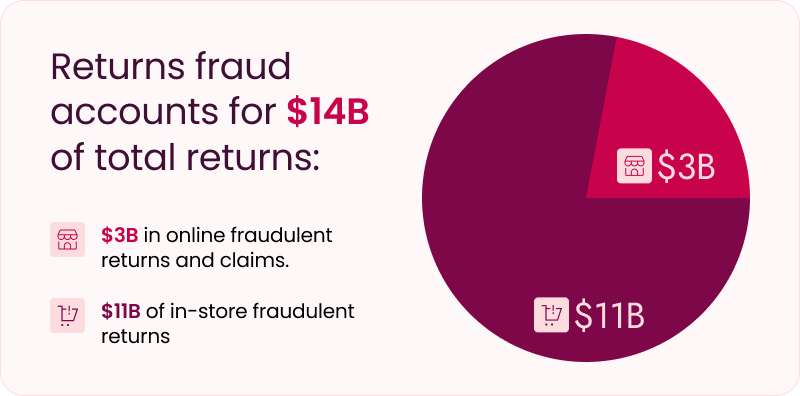
Fraud means fake receipts, returning stolen merchandise, or other behaviors with malicious intent. It accounts for 2% of all returns, worth $14B.
Abuse is especially detrimental because it eclipses outright fraud, and often goes undetected–it looks like normal customer behavior. Retailers need to recognize the patterns, have solutions in place that can detect it, and learn to act on it appropriately.
The data shows that generous return policies can boost customer loyalty—but they also drive higher return rates and abuse when boundaries aren’t clearly communicated. Reducing total returns means changing these behavior patterns, not just catching fraud after the fact. And it has to be done with surgical precision, so you don’t alienate your best customers with unnecessary denials.
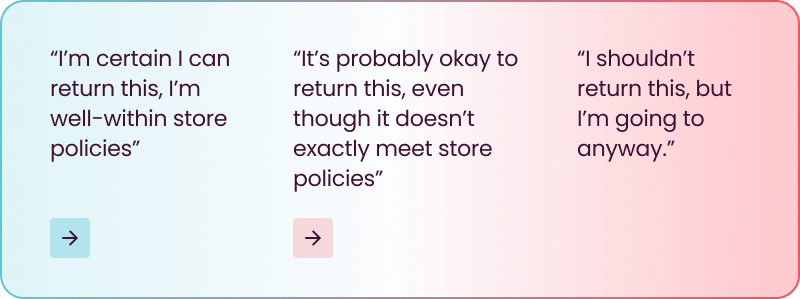
Many customers expressed comfort with (sometimes multiple) gray-area behaviors.
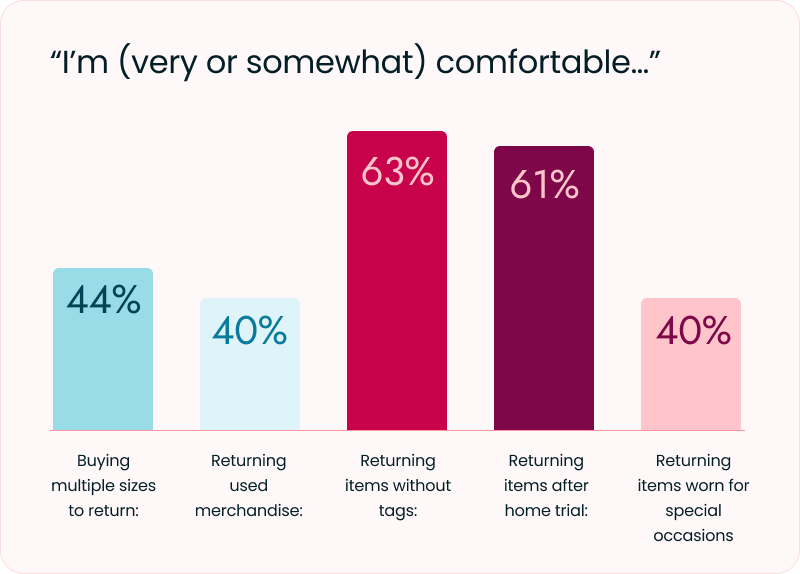
Tales of a frequent returner
Our data shows a tolerance gap between occasional and frequent returners (one that could and should impact your policy boundaries).
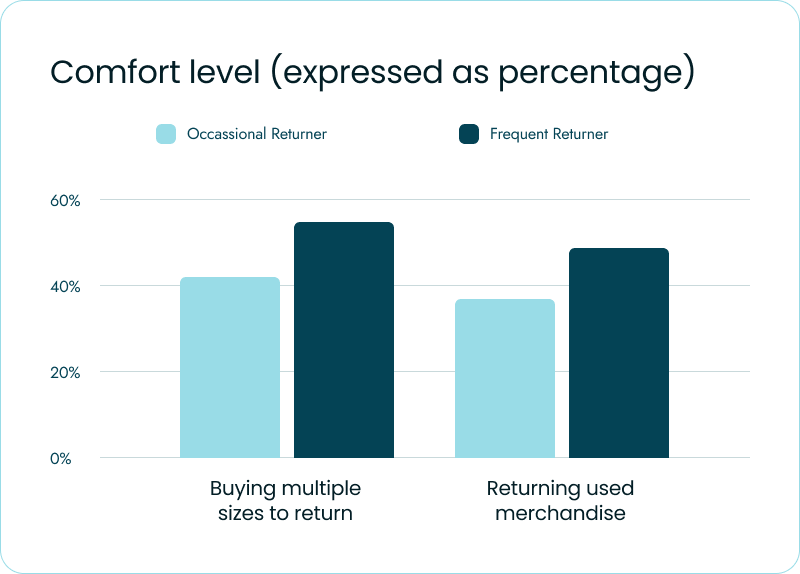
Most abusers don’t know they’re abusing
Most consumers engaging in abusive return behavior don’t realize they’re doing anything wrong. They’re operating within what they perceive as acceptable boundaries— whether returning a high percentage of their purchases, buying multiple sizes/colors (known as “bracketing”), or engaging in rental behavior (commonly known as “wardrobing” in apparel).
This creates a challenge for retail leaders: how do you address behavior that represents a significant portion of loss without damaging the customer experience?
The answer isn’t stricter enforcement across the board. It’s targeted intervention that educates before it punishes so customers can course-correct before relationships (and margins) deteriorate.
From fraud first to customer first
Return fraud doesn’t just impact loss. It simultaneously degrades revenue, cash flow, margin, and inventory accuracy. In our data we found fraud concentrated in two distinct zones:
Non-receipted returns: 9.6% of dollar volume ($68B), but home to the most blatant fraud
Receipted returns: 90.4% of volume ($638B), where you find marginally profitable customers.
Making policy adjustments like “no receipt/no return” may lower non-receipted returns but the collateral damage from denying good consumers far outweighs the benefits. Professional fraudsters will socially engineer the associate or call center to give them the return anyway via an override.
- 47% of shoppers have refrained from a purchase due to return policy concerns
- 56% of frequent returners have opted out of buying due to return policies
Result: ill-fitting policies could sacrifice your most valuable customer relationships
Reframing the goal
The goal isn’t just to stop bad actors, it’s to protect honest shoppers, deter abuse, and help associates make better, more consistent decisions.
Instead of: responding to margin pressure by reintroducing return fees across the board.
Try: maintaining generous policies for the majority and using AI decisioning to apply graduated controls only to high-risk behaviors.
Replace gaps with “warn and approve”
High-return customers are more likely to push policy boundaries. The majority (62%) won’t commit outright fraud, but in the meantime, your generous return policy becomes a subsidy for serial abusers.
The problem takes shape when customers’ return rates grow faster than their purchase rates. Regardless of spend, this behavior shouldn’t be encouraged, as the rate of return makes them unprofitable.
Returns processing accounts for 30% of the retail cost of the unit, totalling $212B in loss across all returns (fraudulent, abusive and legitimate).
What is “warn and approve”?
Warn and approve creates a three-tier approach to return decisions. Unlike traditional systems that only approve or deny returns, this adds a critical middle tier: the warning.
Approve: Legitimate returns from low-risk customers proceed without friction
Warn: Customers showing high-risk patterns receive a notification before facing a decline, giving them the opportunity to course-correct
Decline: Returns that meet fraud or extreme abuse thresholds are blocked
This graduated response educates customers before enforcing consequences in order to preserve relationships while reducing abuse.
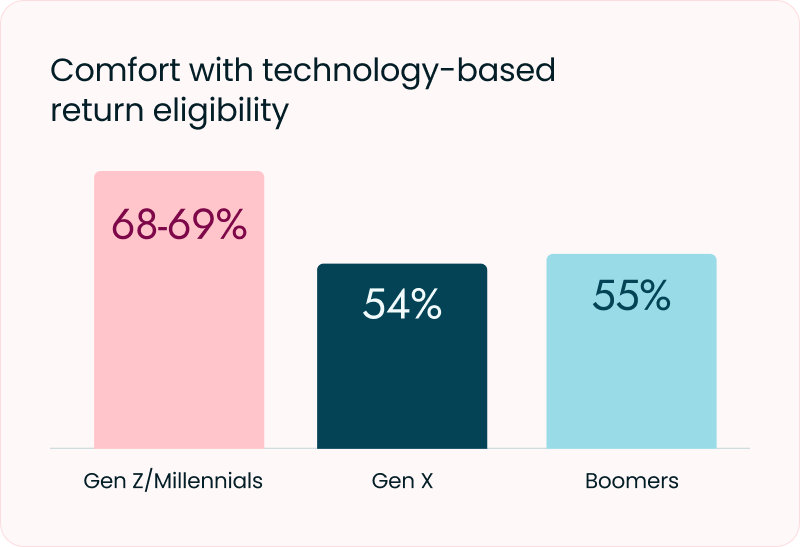
Mind the age gap
Most shoppers (61%) are open to tech-driven return eligibility checks. The transparency customers demand isn’t fear-based—they’ve accepted AI as part of transactions, they just want to understand how decisions are made.
The new role of the associate
Warn and approve protects associates from the burden of making difficult return decisions. Here’s why it works:
The system identifies risk. The associate no longer has to be “the face” of return decisions. They can direct customers to a phone number or website for appeals, helping them avoid in-person friction when disputes arise.
Humans are error-prone and vulnerable to bias. Without visibility into the entire customer profile, it’s impossible to make the right call every time. When you remove the burden of judgment from the associate–you remove the conflict.
Clear explanations and escalation paths let retailers capture AI efficiency without eroding trust.
The anatomy of a positive return
Customers who leave their returns experience with a smile cite the same qualities: fast, friendly and free.
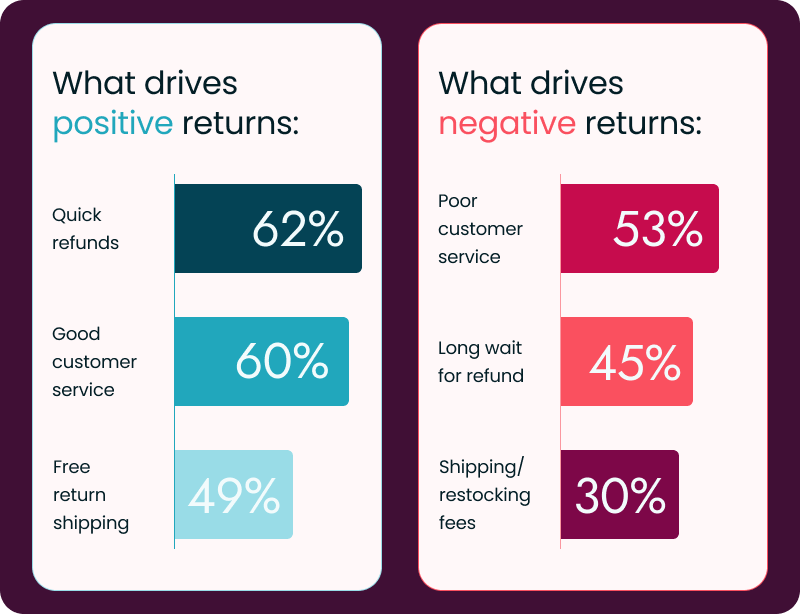
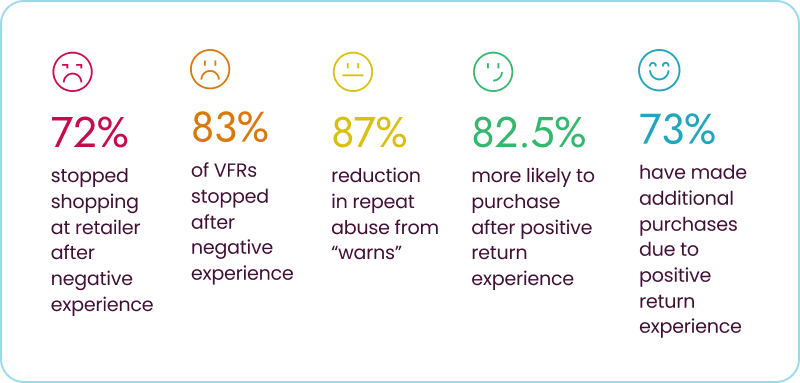
Creating this kind of positive experience at scale requires the ability to make consistent, risk-based decisions across millions of transactions.
From data overload to shrink intelligence
Massive volumes of transactional data make spotting shrink, fraud, operational errors, and inefficiencies slow and resource-intensive, allowing losses to compound while teams investigate.
When data doesn’t flow between channels, retailers face a double problem: they can’t identify root causes of shrink and margin leakage, and they can’t see what’s happening in real time. Both organized criminals and opportunistic employees are able to exploit those gaps.
Total shrink sits at $90B across all channels, but the operational damage extends well beyond missing inventory. Employee theft, operational errors and ORC add up to $47B in total shrink for retailers.
Employee Theft
$26B | 29% of shrink
Associates processing fraudulent transactions create phantom inventory, so where the system expects ten units, only two remain. Fake refunds, unauthorized voids, and collusion schemes drain both sales and margins while distorting the data retailers use for ordering decisions.
Inventory Errors
$19B | 21% of shrink
Distribution center mispicks and transfer errors create a cascade of inaccurate counts. These drive out-of-stock conditions that cost sales and erode brand loyalty, while losses accumulate undetected. Mismatched pairs or sets rendered unsellable add to the damage.
Operational Inefficiencies
$12B | 13% of shrink
Perishable spoilage. Damaged merchandise. Missed recalls. Coupon abuse. Price manipulation. In some categories, operational losses account for up to 70% of store shrink–waste that goes unnoticed until it shows up on the P&L.
Safety, perceived and actual
Shoplifting, particularly in organized retail crime, surged by double digits in the past year and now accounts for $9B in total shrink. Internal theft has also increased. These issues create safety concerns that drive customers away and out-of-stock conditions that cost sales, impacting both revenue and brand loyalty.
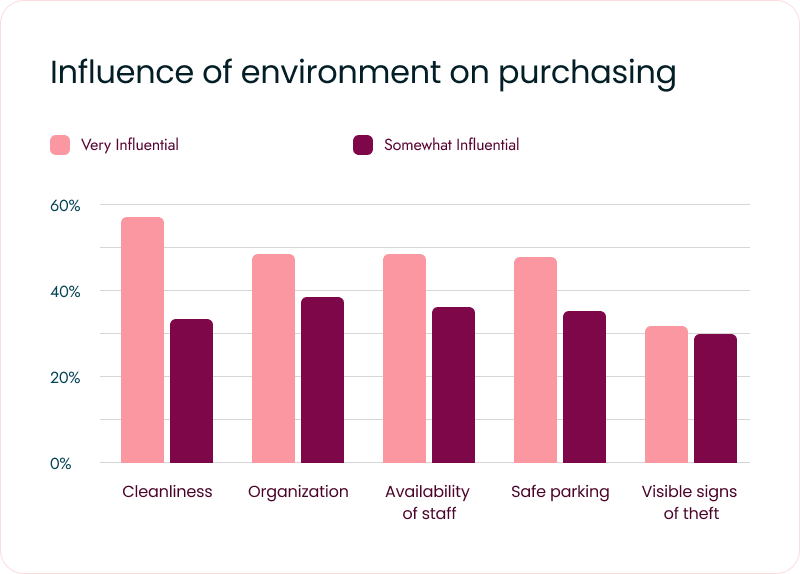
Over a quarter of shoppers (27.6%) would stop buying from a retailer if they felt unsafe in stores.
AI in action
Addressing shrink means connecting three systems that typically operate independently:
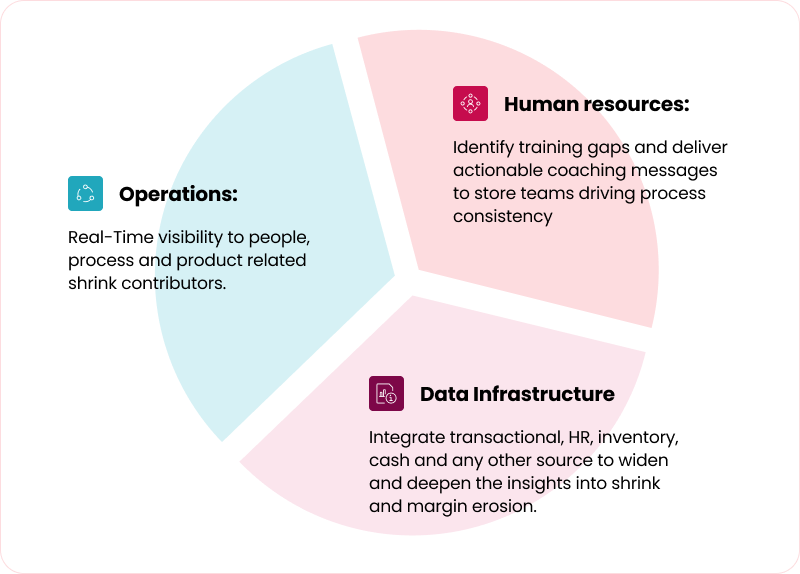
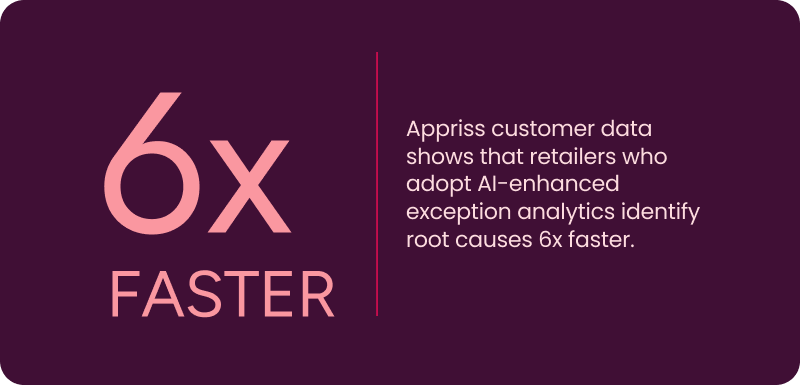
Traditional forensic systems are one-dimensional. They only identify things like employee theft, and often only one behavior at a time. Meanwhile, retailers might face thousands of dollars in losses over months and years of “investigation.” With AI-enhanced analytics, retailers get insight into issues as they occur.
Starting at the root
These AI systems connect POS data, inventory counts, and transaction patterns to determine whether high shrink is internal fraud versus external theft, eliminating the guesswork about where to focus resources.
Tomorrow's TRL and you
As this report has shown, loss prevention now extends far beyond traditional ideas of “shrink.” Returns fraud and abuse are the bigger issue–as customers often don’t even realize they’re committing these abusive behaviors (but won’t go running if you warn them that they are).
Retailers are already protecting profits without sacrificing customer experience by taking a Total Retail Loss approach.
Loss prevention is no longer a department-level effort. It’s an enterprise strategy — bringing together loss prevention, operations, finance, and customer experience under a shared mandate: reduce total loss while protecting margin and loyalty.
This next wave of loss prevention will merge two capabilities most retailers still treat separately:
The pillars of tomorrow’s TRL
Customer risk models with real-time return decisioning
Loss analytics with forensic AI
Retailers who unify these will spot abuse earlier, protect high-value relationships, and maintain friction-free experiences that build long-term loyalty. Fraud thrives in the gaps between systems. In an omnichannel world, unified data is the best defense.
The AI advantage
Modern TRL solutions combine two types of AI:
Real-time decisioning based on customer risk models stops fraud as it happens—approving legitimate returns, warning high-risk behaviors, and declining abuse at the point of sale.
Forensic AI within loss analytics identifies root causes after the fact—surfacing patterns across employees, locations, products, and processes to prevent future loss.
Together, these capabilities let retailers significantly reduce:
- High processing costs
- Time spent decisioning on returns
- Complexity of returns analytics
- Bracketing/wardrobing, fraud, and inconsistent shopper experiences
Returns management
- Approve legitimate returns
- Warn to improve behavior and decline fraudulent or abusive activity
- Protect margins without hurting customer relationships
Shrink management
- Spot risk, from fraud to operational errors, across employees, locations, product and processes
- Emplower teams to investigate issues, optimize workflows and coach on trends that protect profits
Surfacing issues as they happen:
- Identifying which specific associates are processing the most refunds/voids in real-time (no weeks later)
- Flagging organized retail crime rings while they’re actively operating
- Spotting inventory adjustment patterns tied to specific employees immediately
Identifying loss prevention patterns:
- Ranking top returners automatically
- Correlating inventory adjustments to specific POS behaviors
- Correlating inventory adjustments to specific POS behaviors
Progressive optimization: getting started
For returns specifically, retailers implementing AI need to take an approach that allows them to progressively optimize AI-decision-making thresholds without harming customer relationships.
Day One: Start with data gathering – act on clear cases while placing uncertain cases on “forced approval” to collect behavioral data
Early Learnings: Use AI to identify patterns and quantify impact before making any changes to operational processes and procedures.
Collaborative Evolution: Make data-based decisions to calibrate thresholds gradually.
This process isn’t about dramatic overnight changes but about evidence-based, incremental improvements that build retailer confidence over time.
The path forward
If you’re ready to move beyond reactive loss prevention and build a TRL strategy that protects both margins and relationships, let’s talk.
Download the full report and share.
Run the numbers for your category with our Total Retail Loss Calculator.
In the backroom: sources and methodology
Customer survey
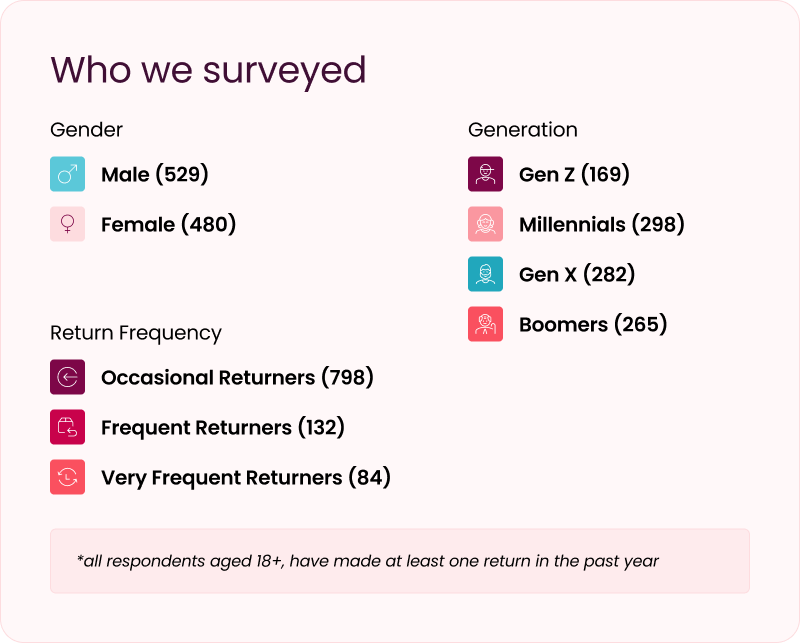
We conducted an online quantitative study of 1,020 U.S. customers aged 18+ who made at least one return in the past year. The survey ran in [December, 2025]. Respondents were balanced across gender, generation, and return frequency to ensure representative coverage of occasional, frequent, and very frequent returners.
Survey responses were weighted to reflect U.S. population demographics and validated against known industry patterns. Where customer self-reporting diverged from observed behavior in Appriss systems, we noted the gap and prioritized observed data for financial projections.
Appriss customer data
Actual transactions and internal analytics from 250 million unique customer identifiers across Appriss Retail clients provided real-world validation of customer-reported behaviors. This data informed our estimates on fraud rates, abuse patterns, processing costs, and the effectiveness of warn and approve interventions.
Industry benchmarks
We referenced available data points from 2022 through 2025 on shrink rates, organized retail crime, and omnichannel adoption from The National Retail Federation (NRF), Appriss Retail internal stats, as well as inventory returns research and publicly available data from ECR Retail Loss, IHL Group, and Deloitte. We used this data to contextualize our findings within the broader TRL environment.