
Position your teams as executive advisors by transforming investigation data into organizational intelligence.
“Our people don’t steal.”
That was the culture that a veteran loss prevention executive walked into when joining a global quickserve retailer. This expert has since spent nearly a decade transforming how the organization understands theft and fraud.
They knew the company had a problem that went beyond individual bad actors, they weren’t acknowledging the loss existed at all.
Any discussion of theft or fraud felt culturally inappropriate, as if acknowledging the problem somehow contradicted company values.
Instead of focusing on “catching bad guys,” the team positioned investigations as systematic identification of leadership gaps.
Every fraud case became an opportunity to strengthen management capabilities and build prevention systems. Every investigation outcome generated structured prevention plans for field leadership.
No longer was the goal just “catching people.” The mission came down to building organizational intelligence that protected margins across the enterprise.
Key Takeaways:
- Build cultures where leadership development prevents losses versus reacting to them
- Position every investigation as a chance to identify training gaps and strengthen field management
- Create regional investigator partnerships with field leadership
- Turn investigation data into executive reports that drive resource allocation and regional performance decisions
The Margin Protection Opportunity
Senior executives rarely have access to the cross-functional margin protection intelligence that loss prevention generates through investigation patterns, regional performance analysis, and revenue loss identification.
“We have a unique view of the business that others don’t,” the expert explains. That view extends across departments, channels, and operational gaps that siloed teams sometimes can’t identify on their own.
Organizations that treat loss prevention as purely operational miss opportunities to build systematic margin protection, optimize resource allocation, and create sustainable competitive advantages through cultural strength.
The Prevention-First Margin Protection Model
The most effective loss prevention programs operate across a spectrum of trust. Too much trust allows people to deviate with authority. Too little trust creates environments where people look for opportunities to circumvent controls.
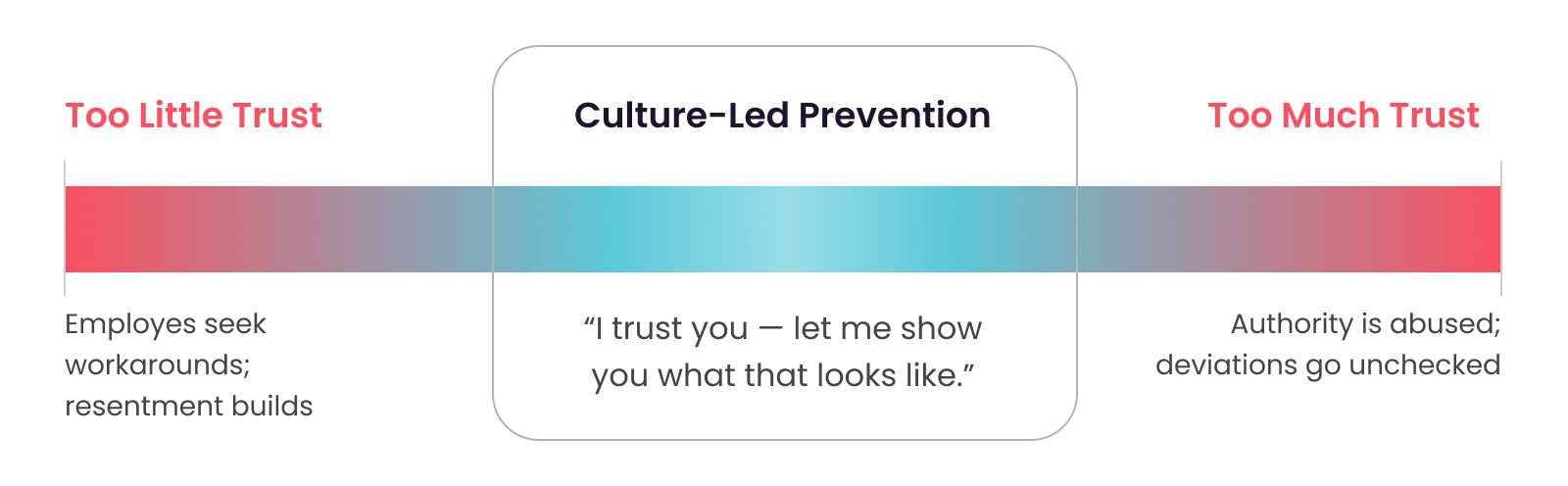
The expert developed training around this concept: “Right in the middle of that spectrum is where I think it’s central to the idea of leading a strong culture prevention. I trust you, let me show you what that looks like.”
This philosophy rests on a simple premise: people commit fraud because they believe they can get away with it. Removing that belief through systematic controls and cultural awareness proves far more efficient than catching people after losses occur.
Building that cultural foundation requires several interconnected elements:
Move from “bad actors” to leadership development
The company had been culturally opposed to discussing theft, a sensitive subject that presses on the morality debate. The expert reframed every investigation as evidence of a leadership gap rather than individual moral failure.
“We kind of pivoted the conversation culturally from it being theft and fraud to, these are partners who need help establishing strong leadership,” the expert explains. That shift opened doors for programmatic owners across functions to actually acknowledge risk and invest in prevention systems.
Create regional relationship models for sustained impact
The team transitioned from decentralized case processing to regional support, where investigators develop ongoing relationships with field leadership rather than just closing cases transactionally.
“We wanted to actually create this idea of relationship and development in that leader rather than just transactionally closing investigations,” the expert notes. Regional investigators can now discuss business performance with area leadership in ways that weren’t possible when the team just processed cases individually and centrally.
Transform investigation outcomes into structured prevention
Each investigation generates a prevention plan for district managers. These plans identify specific gaps discovered during investigations and outline activities to raise standards and prevent recurrence.
“These are the things we found, these were the gaps. We relay all of that,” says the expert. “So here are the activities that you need to do to raise the standard back up.”
Position loss prevention data as executive intelligence
“We’re actually able to heat map the business and point out what markets actually have higher point of sale risk, sales reducing risk activity,” the expert explains. “So we’re not just going after fraud, but we’re actually using that for things like resourcing and inspiring leaders to change their routines.”
This intelligence drives resource allocation decisions and leadership accountability conversations.
Measure effectiveness to optimize detection systems.
The team systematically tracks which fraud detection rules generate actual cases versus false positives, maintaining a high effectiveness rate across all work items through continuous measurement and tuning.
This measurement discipline ensures investigators spend time on genuine fraud patterns rather than chasing operational noise. When one work item generated 50 consecutive false positives during training, the team rebuilt the detection criteria.
Requirements for Next-Generation Systems
While this industry expert has optimized systems, re-framed culture, and moved the needle internally, they envision an even more AI-enabled approach to loss prevention ahead.
They predict a future where AI systems automatically identify organizational patterns across massive datasets that human analysis cannot correlate. Current manual testing processes work, but they’re limited by human capacity to analyze all variables simultaneously.
“There are so many different things that are sitting within a transaction, like time of day or key versus scan. No human can triangulate all of the data points of a transaction,” the expert explains.
The team experimented with video analytics that could distinguish between delivery drivers and burglary events with 100% accuracy across test cases. Similar capabilities applied to point-of-sale transactions could identify fraud signatures that combine dozens of variables beyond human analytical capacity.
The goal extends beyond just better detection. Loss prevention leaders want systems that position them as enterprise-wide margin protection consultants who use comprehensive intelligence to influence organizational culture and build competitive advantages through systematic profit protection.
Core Principles for Strategic Loss Prevention Leadership
Knowledge application matters more than case volume.
While closing investigations remains important, what the organization learns from those cases determines actual business value.
“Our job is to do as many cases as possible,” the expert acknowledges. “But what we do with that knowledge is the most important thing that we could do for the business.”
Regional intelligence identifies optimization opportunities.
Using loss prevention data to identify organizational strengths and profit optimization opportunities across enterprise operations creates actionable intelligence for leadership teams.
After implementing systematic prevention, some regions saw dramatic reductions, as few as 12 or 20 work items down from around 50 in an entire month. These high risk behaviors plummeted.
Prevention thinking precedes detection. Building organizational systems that protect margins systematically reduces the need for reactive investigation after profit damage occurs.
“The Secure platform and the concept of work items and their efficiency helps us make sure we’re looking at stuff that matters every single day,” the expert explains.
Omnichannel retailers and brands who secure comprehensive loss prevention investments recognize that traditional shrink represents only part of the picture. That’s why they position their function around total retail loss—protecting margins across all revenue drains—rather than just case processing operations.
This requires speaking the language of profit protection, building direct relationships with executive leadership, and demonstrating measurable impact across every loss category.
Frequently Asked Questions
How do I get executive leadership to see loss prevention as more than just catching thieves?
Stop presenting case closure metrics and start delivering business intelligence about organizational gaps. Schedule quarterly briefings with executive leadership to share investigation patterns that reveal training needs, process weaknesses, and regional performance differences. Position your team as consultants who identify profit protection opportunities, not just investigators who close cases.
What if my organization’s culture doesn’t support talking about fraud openly?
Reframe the conversation from “bad actors” to “leadership gaps.” When you discover fraud, position it as evidence that employees lacked proper training, awareness, or leadership support. This shift makes it culturally acceptable to acknowledge problems because you’re focusing on organizational improvement rather than individual moral failures.
How do I transition from transactional case processing to regional relationship models?
Assign investigators to specific regions rather than distributing cases across a centralized team. Have them develop ongoing relationships with regional vice presidents and district managers. Each investigation should include a prevention plan for local leadership, creating continuous touchpoints beyond just case closure. This builds your team’s credibility as business partners rather than just enforcement.
Should I focus on increasing case volume or improving case quality?
Both matter, but quality determines business impact. Close as many cases as possible to generate organizational learning opportunities, but ensure each investigation produces actionable intelligence for leadership. Measure your effectiveness rate to ensure investigators work on genuine fraud patterns rather than operational noise.
How do I measure whether my prevention programs are actually working?
Track risk behaviors over time using consistent detection criteria. Count how many high-risk activities occur in each region monthly, then measure changes year-over-year. Also correlate these reductions with leadership engagement metrics—regions that call for investigation support often show stronger risk reductions than those focused solely on catching people.